
The Quest for Inner Peace and Global Harmony: The Relevance of Buddhist Philosophy Anchored in Lumbini: While the modern world enjoys unprecedented material abundance, it remains deeply fractured by geopolitical conflicts, ideological warfare, and pervasive existential unrest. In this turbulent climate, the arrival of the Vietnamese monk Bhante Panna Kara and his entourage at Lumbini—the birthplace of Shakyamuni Buddha—is far more than a mere travel milestone. Having completed thousands of miles of barefoot walking across India and the United States, they have made their pilgrimage a living, breathing embodiment of Sati (mindfulness) and Karuna (compassion). It bridges ancient Eastern wisdom with the anxieties of the 21st century.
1. Philosophical Intersections: Bhikkhu Panna Kara’s Pilgrimage and Core Buddhist Doctrines
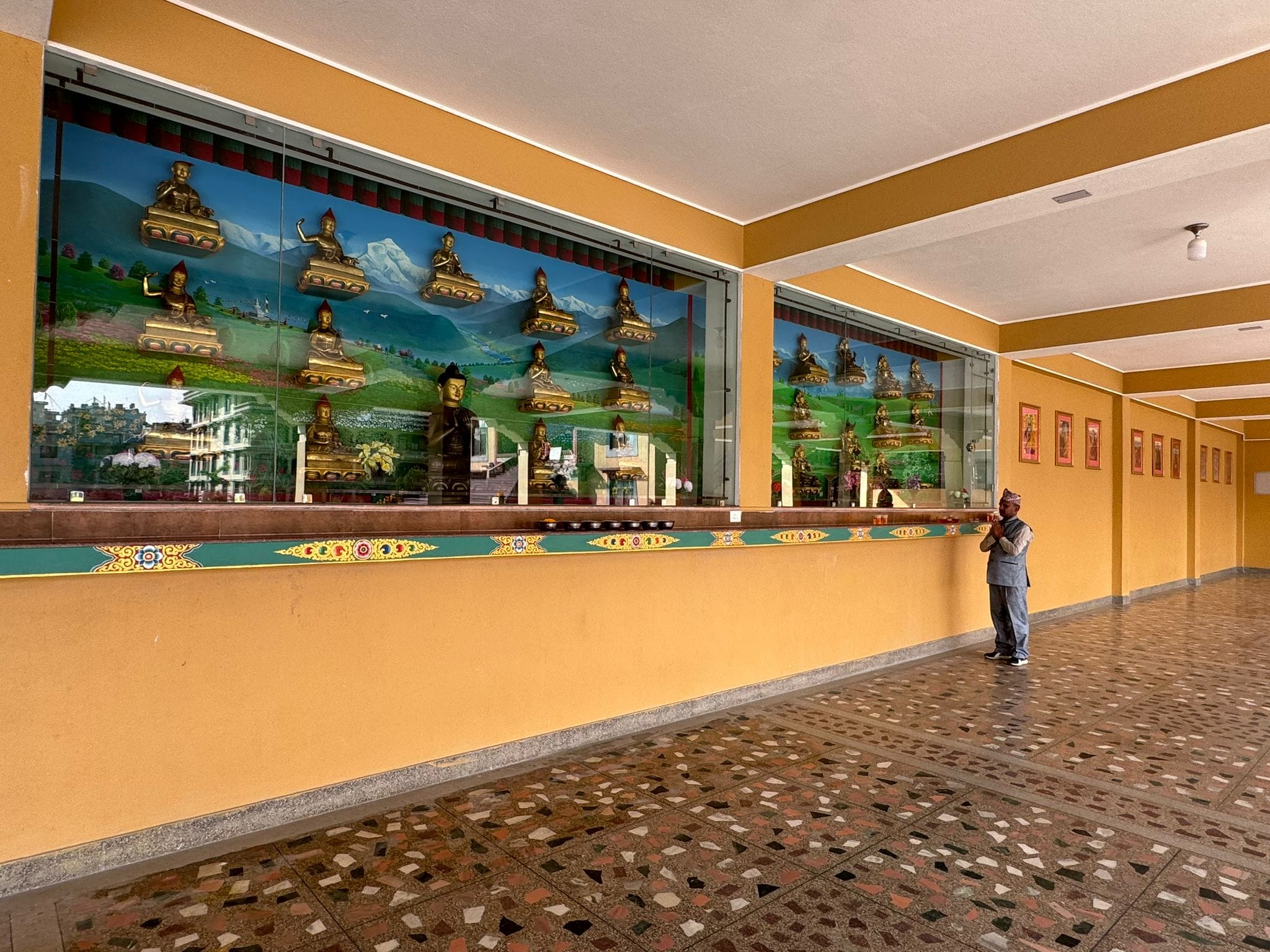
The core messages from Bhante Panna Kara’s journey intricately weave into classical Buddhist tenets. Academic and philosophical research highlights three vital dimensions of this connection:
A. Inner Serenity and Self-Reflection (Vipassana and Sati)
Upon paying respects at the sacred Mayadevi Temple in Lumbini, Bhante Panna Kara observed: “If humanity can simply look into its own inner mind, only then can we attain true peace.”
This statement directly aligns with the Pratītyasamutpāda (Dependent Origination) and the Four Noble Truths. Buddhist philosophy posits that external conflicts are merely reflections of internal defilements (Kleshas)—specifically Raga (greed/attachment), Dvesha (hatred/aversion), and Moha (delusion). Psychological research into modern mindfulness echoes this ancient view: true global disarmament cannot begin with treaties alone; it must start with emotional and mental disarmament within the human psyche through self-observation (Vipassana).
B. The Transition from Materialism to Transcendence (Nekkhamma or Renunciation)
Bhante Panna Kara’s personal history—relinquishing a highly lucrative and successful career as an engineer to don the monastic robes—mirrors the historic Mahabhinishkramana (The Great Renunciation) of Prince Siddhartha.
In contemporary consumerist societies, success is often measured by capital accumulation. However, Buddhist economics and philosophy argue that insatiable desire (Tanha) is the root of suffering (Dukkha). Renunciation (Nekkhamma) is not an act of cowardly escape; rather, it is a brave psychological shift toward Alpichata (contentment with less). By walking barefoot, the Bhikkhu demonstrates that supreme happiness is found not in accumulating wealth, but in the expansion of consciousness and selfless service to humanity.
C. Aloka: The Living Embodiment of Universal Compassion (Metta) and Ahimsa
A remarkable facet of this journey was Aloka (meaning “Light” or “Illumination”), a stray dog rescued along the way who became an inseparable member of the monastic entourage. Aloka’s participation—even sitting calmly during group meditations—serves as a beautiful proof of concept for Ahimsa (non-injury) and Metta (loving-kindness).
In Mahayana Buddhism, the Bodhicitta (enlightened mind) views all sentient beings as interconnected, historically having been our mothers or fathers in previous lifetimes. Aloka represents the ecological and cosmic harmony inherent in Nepalese and Buddhist philosophy, showing that when human beings project pure, non-threatening compassion, the natural world and the animal kingdom instinctively respond with peaceful coexistence.
2. The Sacred Soil of Nepal and Its Geopolitical Responsibility for Peace
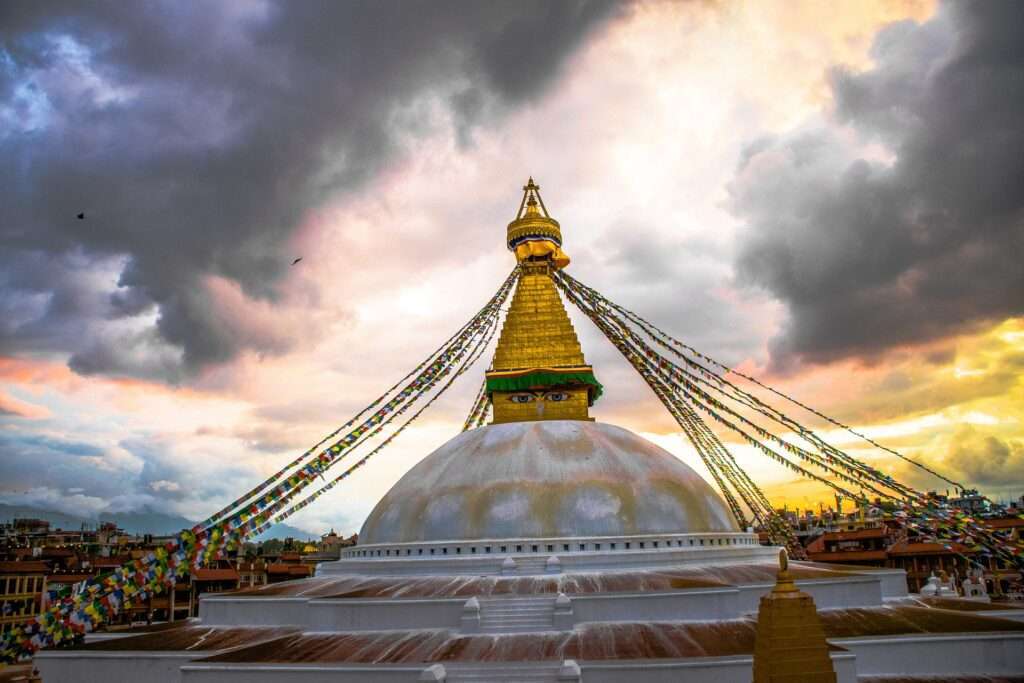
Nepal’s identity extends far beyond its breathtaking topography and Himalayan peaks; it functions as a critical spiritual powerhouse and a sanctuary of primordial peace.
As noted by Bhikkhu Maitri Mahasthavir, President of the International Monastic Association, the escalating theaters of war globally demand that Lumbini reassert its voice as the epicenter of global diplomacy and pacifism.
The Triad of Welfare: Sila, Samadhi, and Panna
Human welfare can only be preserved if society anchors itself onto the three pillars of the Noble Eightfold Path:
-
Sila (Morality/Ethics): Right speech, action, and livelihood to prevent harm.
-
Samadhi (Concentration/Awareness): Cultivating a disciplined, unshakeable mind.
-
Panna (Wisdom): Understanding the ultimate truth of impermanence (Anicca) and selflessness (Anatta).
By walking barefoot for 112 days across the hyper-industrialized, fast-paced landscape of the United States (from Texas to Washington D.C.), this delegation served as a stark, counter-cultural reminder. They brought the quiet, unhurried energy of Lumbini directly to the doorsteps of Western geopolitical power, reminding the world of the ancient message of non-violence born on Nepalese soil.
Summary of Bhikkhu Panna Kara’s Global Peace Walk 

| Phase of Journey | Distance / Duration | Core Objective & Philosophical Output |
| The Indian Odyssey (2022) | 3,400 Kilometers | Retracing the footsteps of the Buddha across ancient pilgrimage sites (Char Dham) to revive spiritual roots. |
| The Trans-American Walk (Recent) | 2,300 Miles (112 Days) | A barefoot walk from Texas to Washington, D.C., advocating for nuclear disarmament, mental health awareness, and global harmony. |
| The Return to Source (Nepal) | Arrived Ashadh 1, 2083 (BS) | Concluding the spiritual arc at the Mayadevi Temple with sacred Sutta recitations, deep meditation, and high-level diplomatic dialogues for peace with the Head of State. |
Conclusion: The Light of the Inner Dawn
Bhante Panna Kara beautifully summarized the metaphysical reality of Nepal when he remarked that stepping onto the sacred soil of Buddha’s birthplace caused the accumulated exhaustion of thousands of miles to instantaneously vanish. This is not mere psychological relief; it is the palpable spiritual resonance (Spanda) of a land that has hosted meditators for millennia.
Ultimately, the journey reminds us that outer peace is an impossibility without inner awakening. Until the light of awareness is ignited within the human heart, the world will remain in darkness. Lumbini stands eternal, challenging humanity to uncover its own inner Aloka (light) and walk the path of gentle, mindful existence.